What do dental billing services actually cover?
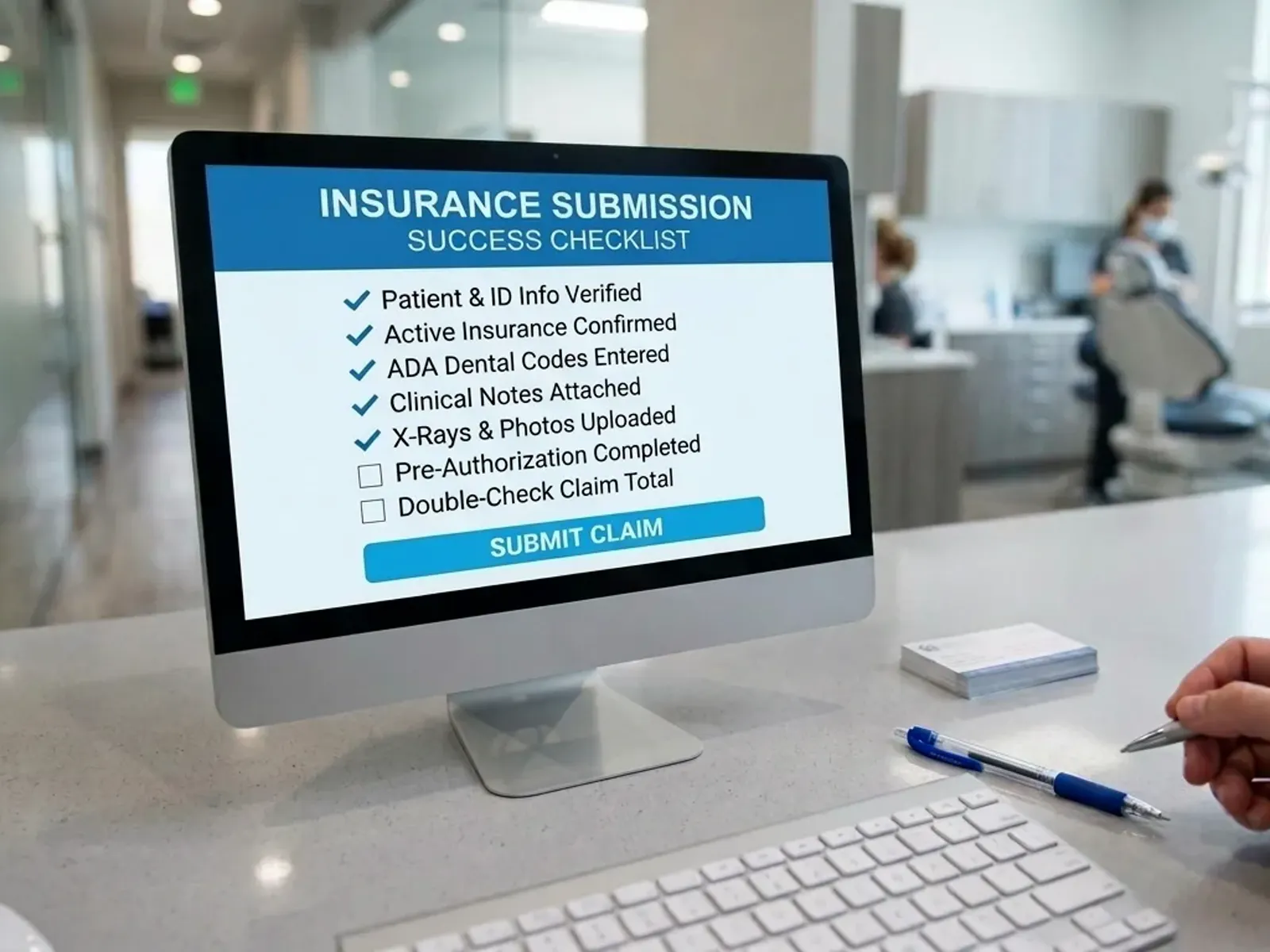
It varies enough between vendors that the word alone tells you very little. At the narrow end it means submitting claims and posting payments. At the wide end it covers insurance verification before the appointment, claim submission, denial rework and appeals, aged A/R recovery, patient balances, and recall. We do the wide version, and the specific split is written into the scope rather than left to interpretation.
How much do dental billing services cost?
Three models dominate: a percentage of collections, a flat monthly fee, or hourly and dedicated staffing. We scope per practice rather than publishing a rate card, because payer mix and the size of the existing backlog move the number materially. What we will do on the first call is tell you the pricing model before quoting a figure, so you can compare like for like against other vendors.
Do we have to switch practice management systems?
No. We work inside the system you already run rather than exporting your data into a platform of ours. There is no migration, nothing new for your in-office team to learn, and no second source of truth to reconcile at month end.
Is offshore dental billing HIPAA compliant?
It can be, and the location is not what decides it. What decides it is a signed Business Associate Agreement, encryption in transit and at rest, role-based access, audit logging on every record touched, and a vendor willing to show you those controls rather than assert them. Ask any vendor, including us, to evidence each one. Our Security and HIPAA page sets ours out in full.
Is outsourced dental billing worth it?
It is when follow-up is the part that keeps slipping: claims nobody chases, denials written off, an over-90 bucket that grows quietly. Dental billing outsourcing buys a team whose only job is that work, every day, inside your system. It is not worth it when one stable in-house biller already keeps aging low, and we would rather tell you that than sell you a contract. The in-house vs outsourced comparison puts real Texas salary data against it.
How is this different from hiring a biller in-house?
Mostly coverage and continuity. One in-house biller is a single point of failure: holidays, illness and resignation all stop the work, and the vacancy between people is usually where the aging report grows fastest. A team absorbs that. Run the comparison against your fully loaded cost (salary, payroll taxes, benefits, PTO cover, software seats, training), not against the salary line alone.
Where is your team based?
The team is distributed, and we go through how it is structured on the call, with the access controls and the BAA. What matters day to day is when the team works rather than where it sits: we work live through your business day, so claims get worked and payers get called during your hours instead of overnight. Arrangements running opposite your clock cannot do that, whatever the hourly rate.