Insurance verification
Dental insurance verification, done before they sit down.
Dental insurance verification services that cover eligibility and the full benefits breakdown (frequencies, history and remaining maximum), checked ahead of the appointment and entered in your system, so nobody is guessing at the chair.
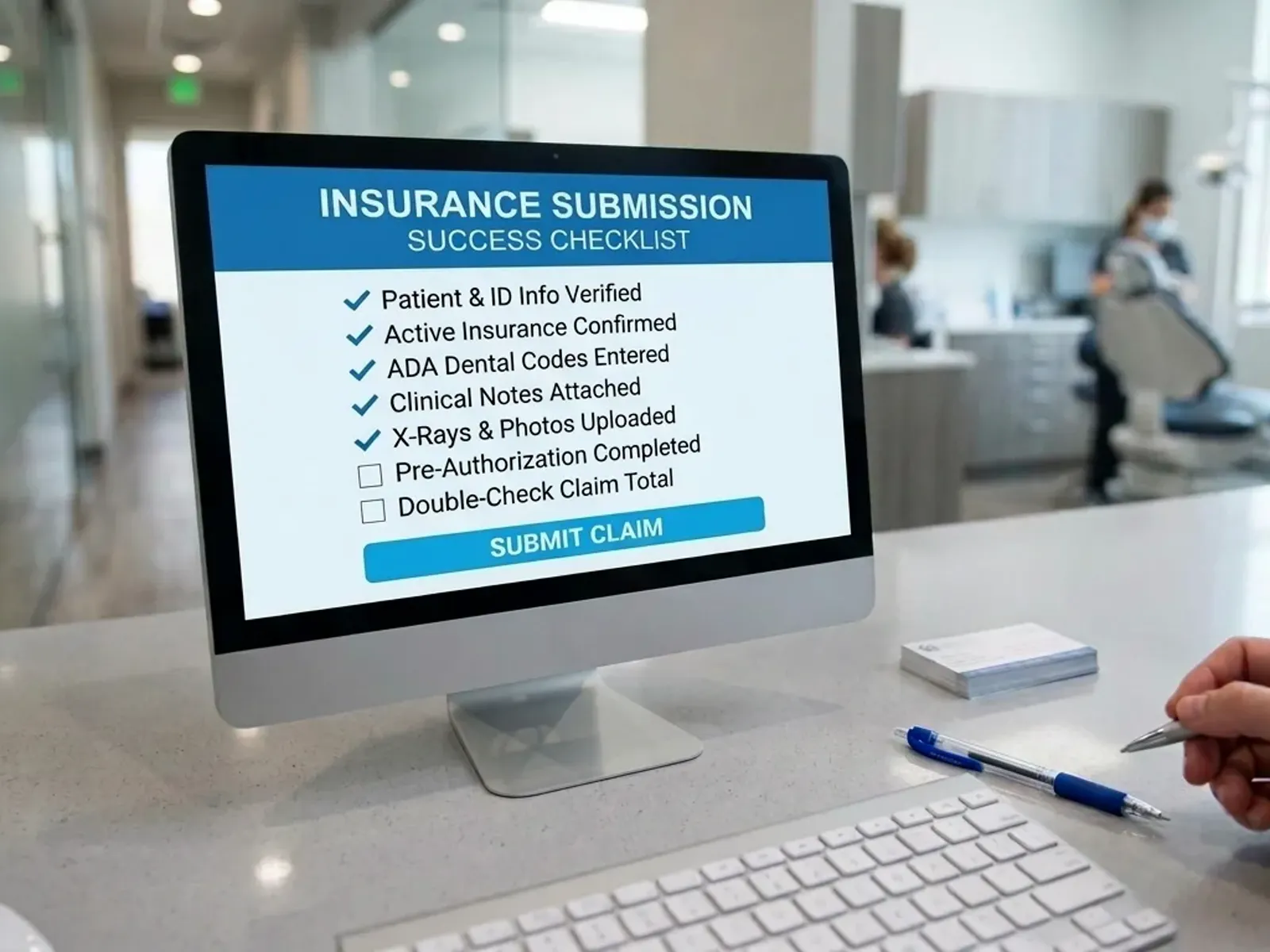
- ActiveEligibilityPlan and coverage datesConfirmed
- Freq.FrequenciesD1110, D0120, D0274 limitsEntered
- Hist.HistoryLast D0210 and D4341 datesEntered
- Max.MaximumAnnual maximum remainingEntered
- ClauseDowngradesPosterior composite, missing toothNeeds a call
The problem
Unverified benefits cost you twice. Treatment gets presented against numbers nobody confirmed, the claim comes back short, and the balance lands on a patient who was told something different. Then someone spends an afternoon on hold explaining it.
Get the highlights.
Checked before the visit
Verified days ahead. Not at checkout.
Eligibility and benefits confirmed ahead of the appointment, not discovered at checkout when the patient is already holding a card.
The details that actually bite
The fields that turn a plan into a write-off.
Frequencies, waiting periods, downgrades, missing-tooth clauses, history and remaining annual maximum: the fields that turn an accepted treatment plan into a write-off.
Entered where you work
Entered in your system, on the appointment.
Frequencies and history
Recall and perio, presented clear of a denial.
Frequencies and history captured, so recall and perio don't get presented into a denial.
Remaining maximum
The number that makes year-end treatment land.
Remaining maximum tracked, which is what makes end-of-year treatment conversations land.
Per patient
Ready before the patient is.
Breakdown entered per patient ahead of the appointment, not retrieved on request.
What we check
The portal tells you some of it.
A call tells you the rest.
Usually in the portal
- Eligibility and effective date
- Deductible and how much is met
- Plan type and fee schedule
- Coverage by category
- Annual maximum (often incomplete)
Usually needs a call
- Frequencies and history
- Waiting periods
- Downgrades and alternate benefits
- Missing tooth clause
- Coordination of benefits
These are the fields that cause the surprises. We make the call.
Verification your treatment coordinator can trust.
The point of verification is not paperwork. It is that the number your coordinator says out loud is the number the patient eventually pays.
Days ahead.
Worked from your schedule rather than from requests, so the breakdown is there before the patient arrives.
Portal and phone.
Portals where they carry the detail. A call for the fields they leave out.
Your PMS.
Benefits recorded in the practice management system you already run, on the appointment.
Same-day adds, too.
Emergencies and same-day adds checked as they land, so nothing reaches the chair unverified.
Five locations.
Verification run ahead of the schedule across five locations so treatment is presented against confirmed benefits.
Eligibility check or full verification?
An eligibility check confirms the plan is active. Full dental insurance verification tells you what it will pay.
Dive deeper
The full guide to dental insurance verification.
What a complete dental insurance verification covers
Eligibility is the easy part, and it is the part most verification stops at. A patient can be active on the plan and still leave a balance nobody warned them about, because the benefit that mattered was a frequency limit, a waiting period or a downgrade. A complete verification records every field that can change what the patient owes, against the procedures actually on the schedule.
| Field | Why it matters at the chair | Where it usually comes from |
|---|---|---|
| Eligibility and effective date | No coverage, no claim. Plans terminate mid-year more often than patients realize. | Portal |
| Plan type, network status and fee schedule | Decides whether you bill your UCR or the contracted fee, and what the write-off is. | Portal, sometimes a call |
| Annual maximum and amount remaining | The single most common reason a treatment plan is presented wrong in the fourth quarter. | Portal, often incomplete |
| Deductible and how much is met | Changes the first visit's estimate and every one after it. | Portal |
| Coverage percentages by category | Preventive, basic and major are not defined the same way by every payer. | Portal or call |
| Frequency limits and history | Prophies, bitewings, FMX, perio maintenance and fluoride all have them. History is what tells you whether this visit is the one that gets denied. | Usually a call |
| Waiting periods | New plans frequently exclude basic and major work for months. | Call |
| Downgrades and alternate benefits | Posterior composites paid at the amalgam rate, porcelain crowns paid as metal: the gap lands on the patient. | Call |
| Missing tooth clause | A bridge or implant replacing a tooth lost before coverage began may not be covered at all. | Call |
| Coordination of benefits | Which plan is primary decides who you bill first, and getting it wrong delays both claims. | Call, and the patient |
The pattern in that last column is the whole problem. The fields a portal shows quickly are the ones that rarely cause surprises. The fields that cause surprises are the ones that need a person on the phone with the payer, which is exactly the work that loses to whoever is standing at the front desk. Our guides on the missing tooth clause and coordination of benefits go through the two that trip up the most claims.
How the work runs, day by day
- We work from your schedule, not from requests. Every appointment several days out is pulled into the verification queue, so nobody has to remember to ask.
- Each patient is checked against the procedures actually booked, not a generic breakdown. A perio maintenance visit needs the perio frequency and history; a crown seat needs the downgrade and the replacement rule.
- Portals first, where they carry the field. A call to the payer for everything they do not, with the reference number recorded.
- Findings go into your practice management system against the patient and the appointment, in the fields your team already reads, not in an email or a spreadsheet.
- Anything that changes the plan is flagged before the visit: an exhausted maximum, a waiting period, a frequency that has already been used, a plan that termed.
- Same-day adds and emergency appointments are checked as they land, so the schedule never reaches the chair unverified.
How long does dental insurance verification take?
Less than people fear for an eligibility check and more than they budget for a full breakdown. A portal lookup is quick when the payer's portal carries the field you need. A full breakdown with frequencies and history usually means a phone call, and the payer's hold queue sets the pace, not the person waiting in it. That is why verification done at the front desk gets cut short: it is not that the team does not know how, it is that a 40-minute hold cannot happen while patients are checking in.
Doing it several days ahead removes the time pressure entirely. The hold time still exists, but it is spent by someone whose only job that morning is verification, and it is spent before the patient is in the building.
Verification is not pre-authorization
Verification tells you what the plan says it covers. A pre-authorization, or pre-treatment estimate, asks the payer to review a specific proposed treatment before it is done. It is slower, it is not a guarantee of payment, and it is worth doing for large or unusual treatment where the plan language is ambiguous. We verify every scheduled patient; we submit pre-treatment estimates where your team decides the treatment warrants one, with the narrative and attachments a reviewer needs. Our page on claim narratives sets out what makes one hold up.
What still causes a surprise after verification
- History the payer does not disclose until the claim. Some payers will not confirm the last date of service for a procedure by phone, so a frequency can only be verified as far as they will say.
- Benefits that change between verification and the visit, such as a plan that terms at the end of the month or a deductible met elsewhere in between.
- Coding changes at the chair. A planned D4341 that becomes a D4342, or a crown that becomes a build-up and crown, needs the new code checked too. See periodontal codes and crown codes for where those decisions go wrong.
- Secondary coverage the patient did not mention. Asking every patient, every year, is the only cure.
None of these are reasons to skip verification. They are reasons to record what the payer said, when, and under which reference number, so a claim that comes back different can be appealed on the record rather than argued from memory.
Dental insurance verification outsourcing: in-house or outsourced?
In-house verification works when someone has protected time for it and the payer mix is narrow. It breaks down when the same person also answers the phone and checks patients out, which is most front desks. Outsourcing makes sense when verification is the task that keeps getting cut short, when you run several locations that each verify differently, or when the person who knew how to do it properly has left. If you want to keep it in-house, our free insurance verification form is the list we work from.
How to choose a dental insurance verification service
Most verification services look alike on a sales page. Four questions separate them, and each has a plain answer you can ask for before signing anything:
- Portal or call? Portals carry eligibility, maximums and deductibles. Frequencies, history, waiting periods, downgrades and the missing tooth clause usually need a call to the payer. A service that only uses portals is doing the easy half.
- How far ahead? Verification worked from your schedule several days out leaves time to fix a problem before the patient arrives. Verification at check-in does not.
- Checked against what? A breakdown tied to the procedures actually booked is useful. A generic benefits summary is not.
- Where do the results go? They should be entered in your practice management system, on the patient and the appointment, in the fields your team already reads, with the payer's reference number recorded.
Those are the standards we hold ourselves to, and the same questions are worth putting to any vendor you compare us with.
What we need from you to start
- A signed Business Associate Agreement. Nothing moves before it.
- A login to your practice management system with role-based access, and to the payer portals you already use.
- Your fee schedules and the payers you are in network with.
- How you want findings recorded: which fields, which notes, which flags your treatment coordinator reads.
We start on one location or one block of the schedule, so you can check the breakdowns against what your team would have entered before you hand over more.
Questions.
How far ahead do you verify?
Far enough ahead that the treatment coordinator has the breakdown before the patient arrives, typically several days out, worked from your schedule rather than from requests.
Do you use portals or call the payers?
Both. Portals are faster where they carry the detail; the fields that matter most (frequencies, history, downgrades) often are not in the portal, and those need a call.
Can you verify inside our practice software?
Yes. We verify through payer portals and by phone, then record the benefits directly in your practice management system, whichever one you use, so the front desk sees them on the appointment.
What about eligibility on the day?
Same-day adds and emergencies get checked as they land. The goal is that nothing reaches the chair on unverified benefits, not that we only work a fixed list.